Invisible Service: Why the Best Events Have Staff You Never Notice
Feb 8, 2026
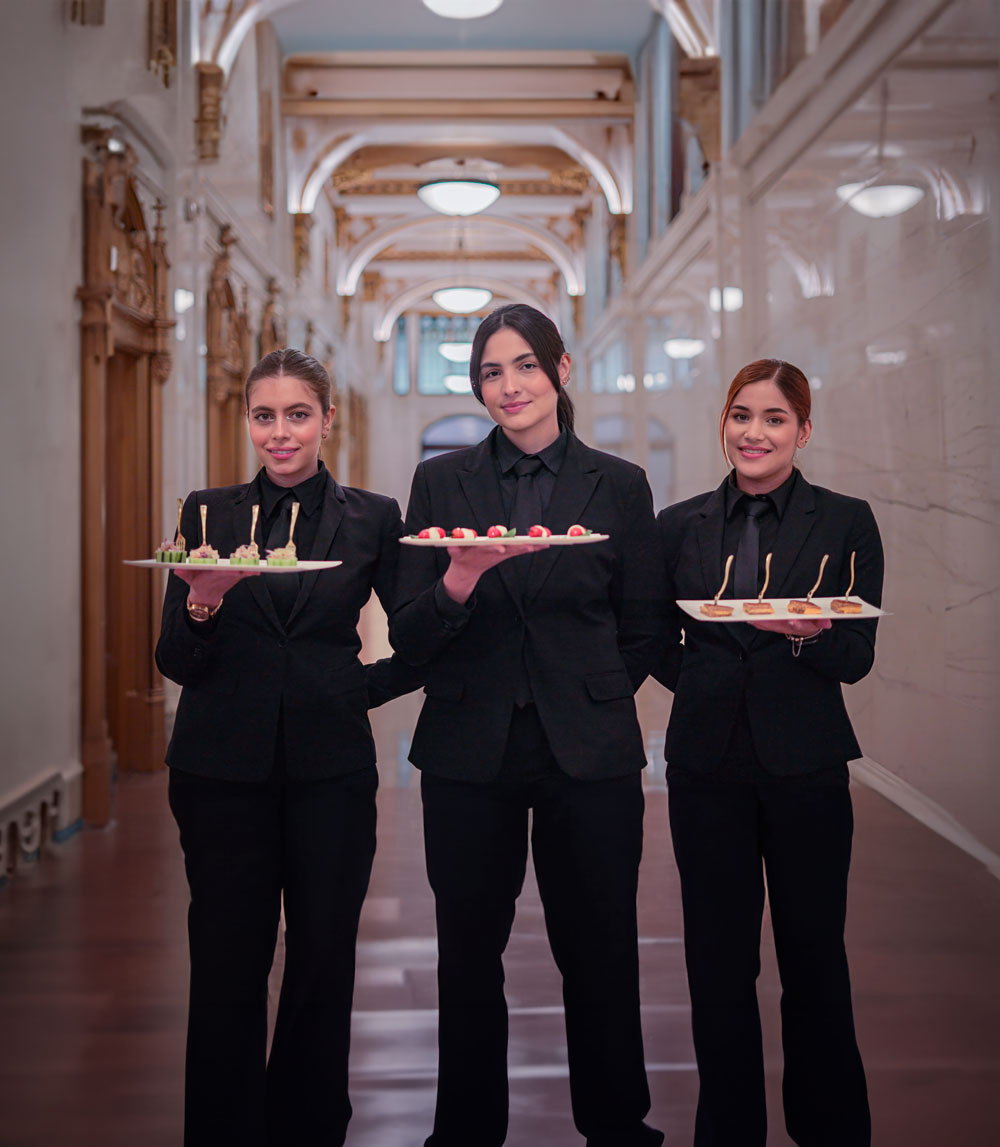
The Service You Don't See Is The One They Remember
At last year's Met Gala, 400 guests enjoyed a flawless six-hour evening where the champagne was always cold, glasses were never empty, and plates were cleared at the perfect moment. If you were to ask those guests how many servers they consciously noticed, the correct answer should be: none. This is the essence of invisible service. It is not magic, but a meticulously rehearsed choreography where every movement is calculated to anticipate needs without interrupting conversations. This is the standard that separates a "good" corporate event from a luxury experience your guests will remember for years, and there is a reason the world's most exclusive brands have made it their signature: it works.
The Luxury Paradox: See Me Without Watching Me
Here is the challenge facing high-level events in 2026: 87% of luxury clients expect personalized, anticipatory service, meaning they want you to know their name, favorite drink, and dietary restrictions without ever being asked. However, simultaneously, 73% of those same clients fear feeling watched or invaded. To illustrate the cost of failing this balance, consider an investment firm that hosted a private dinner at an exclusive Manhattan club to close a $50 million deal. They hired a "premium" catering service that boasted personalized attention, but the servers interrupted the conversation 14 times during the critical pitch to ask if everything was okay or if they wanted more water. The CEO later shared that he lost his train of thought repeatedly, and the client was visibly annoyed. Although they closed the deal, it was despite the event, not because of it. That is the cost of invasive service: you don't just ruin the moment; you damage the relationship in a market where you don't get a second chance.
What Invisible Service Really Means (And Why Ritz-Carlton Trademarked It)
Invisible service does not mean your staff hides in shadows; it means they are present without being intrusive, acting without being seen, and anticipating without overwhelming. Ritz-Carlton mastered this years ago through their Mystique program, a system where they discreetly record guest preferences—from coffee temperature to newspaper format—and train staff to satisfy those needs "magically" without flaunting that they have a file on you. The results speak for themselves: a 42% increase in repeat guest satisfaction and 67% higher loyalty program engagement. Aman Resorts took this further with their "invisible presence" philosophy, training staff in zen observation to read body language and detect subtle discomfort. Their satisfaction score reached 95%, with over half of their reviews specifically mentioning that the service felt "intuitive" or "effortless."
The Three Pillars of Invisible Service
Observation Without Surveillance: Your staff must be trained to notice details without constant eye contact. This involves detecting a glass is nearly empty using peripheral vision, noticing someone searching for a napkin through subtle body language, and identifying when a conversation is at a natural pause versus a critical moment where they should stay away.
Surgical Timing: The difference between invisible and invasive service is when you act. Invasive service interrupts to ask "need anything?", while invisible service refills wine during a natural pause when someone takes a breath. At LZG, we train our team in "the conversation rule": never interrupt a half-finished sentence. If there is laughter or intense eye contact, we wait. The perfect moment to act is during a second of silence, a casual glance at the space, or a natural transition like a topic change.
Discretion In Every Gesture: True discretion includes fluid movements without abruptness—no clinking plates or heavy steps. It requires a calibrated voice volume; at luxury events, we speak in low tones and never shout between staff. Finally, the attire must not compete with the event, utilizing elegant black without noisy accessories or strong perfumes that could interfere with the aroma of the food.
How We Train Invisible Service at LZG Event Staffing
Let me be honest: Not every server can do this. Invisible service requires advanced emotional intelligence, something you can't learn in a 2-hour training. That's why at LZG our certification process includes reading non-verbal signals using real event footage. We pause key moments to ask: "Does this guest want more wine or are they satisfied?" or "Is this gesture a need for help or just a posture adjustment?" Our staff learns to distinguish 12 basic body signals that indicate the difference between a need and comfort.
We also train our team in the "Phantom Refill" technique, specifically the "two-finger" method. When a wine glass is two fingers from empty, it's time to approach. By positioning themselves on the guest's non-dominant side and making subtle half-second eye contact—just enough to be acknowledged but not enough to interrupt—the server proceeds if the guest nods or continues their conversation. If the guest signals "no," the server retreats without a word. The result is a guest who never consciously noticed their glass was refilled and never felt pressured.
Furthermore, we focus on Team Synchronization. Invisible service collapses if one server executes perfectly but another clinks plates. At formal dinners of 8-12 people per table, all plates are served simultaneously using non-verbal signals, mental counting (3, 2, 1, serve), and mirror movements. When executed well, guests experience a choreographic moment where 12 plates land in 3 seconds with no noise. It looks like ballet, and that is precisely the idea.
The ROI of Invisible Service: Why It Commands Premium Investment
The data every event director should know is that luxury hotels implementing invisible service command 35-50% higher rates than competitors because clients pay for a frictionless experience. Think about it: would you prefer an event where guests say "the food was good," or one where they say "I don't know how they did it, but everything flowed perfectly"? In Manhattan, where every event is a multi-million-dollar networking opportunity, that perception of fluidity translates to closed deals, strengthened relationships, and returning clients. A recent study found that anticipatory service increases guest satisfaction by 28%, and most importantly, events with invisible service are 3.2x more likely to generate organic referrals. In New York, that word-of-mouth is pure gold.
The Difference Between "Good Service" And "Unforgettable Service"
To see this in practice, consider a private dinner LZG staffed for a hedge fund in Manhattan with 40 guests and a seven-course tasting menu. Our briefing was clear: "You are invisible. If someone remembers seeing you, we failed." During the third course, a server noticed a VIP guest's Bordeaux was nearly empty while he was mid-explanation about derivatives. The server waited, observing from ten feet away. Only when the guest finished his point and the table laughed did the server approach from the left, make a half-second of eye contact, refill the glass in four seconds, and retreat. The guest never stopped talking. At the end of the night, the partner told me: "I don't know how you did it, but no one interrupted a single important conversation in 4 hours." That client now works exclusively with LZG.
Your Next Event Deserves More Than "Good Service"
If you're organizing a corporate gala, fundraising dinner, or VIP event in New York, the question isn't "do I need service staff?" The question is: "Do I want my guests to remember interruptions or remember a flawless experience?" At high-level events, every detail communicates who you are as a brand. A server who asks "everything okay?" six times says you don't trust your own service. A team that anticipates needs without asking says: "We're excellent at what we do. You can relax." At LZG Event Staffing Group, we train our team in the psychology of luxury, understanding that in New York, invisible service isn't a luxury—it's the standard.
Ready For An Event Where Service Is Felt, Not Seen? If your next event deserves staff who understand the difference between being present and being intrusive, let's talk. At LZG, we don't just provide servers; we provide frictionless experiences that your guests remember for the right reasons.